latest News
BOSU Ball creator's favorite Xero Shoe?
David Weck, developed the BOSU ball and is all about helping people maximize their health and performance. What shoe does David, and his team at weckmethod.com wear? Check out the video, below, for the answer to that question plus his great (and FAST) advice on how to make the transition from a "normal" shoe to a minimalist, lightweight shoe that lets your feet do what's natural.
Foot Care for Endurance Athletes
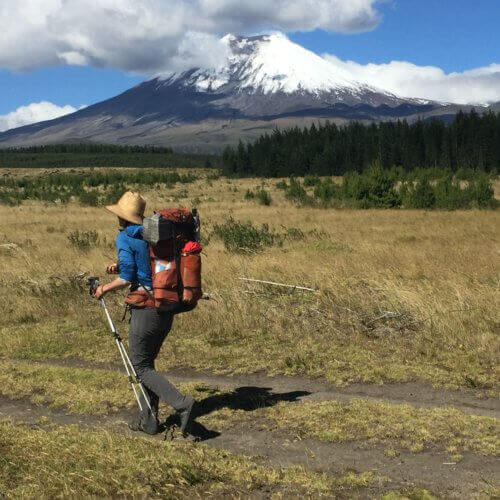
“And forget not that the earth delights to feel your bare feet.” Khalil Gibran Of the 206 bones in your body, 52 are in your feet. Each and every one contributes to getting you to where you are going and is a potential major hindrance if not cared for. As a long distance, long term athlete, I spend a lot of time on my feet. Over the last 7 years I have hiked 12,000 miles, paddled 1,500 miles, and bikepacked 4,000 miles. With 3,500 miles left to complete a non-motorized traverse of the Americas, physical maintenance, and specifically foot care, is crucial. One of the important lessons I’ve learned has been moderation. It sounds silly putting those two thoughts into the same sentence but it is a fundamental truth to how I’ve been able to keep going for so long. Maintaining a pace and stride which works for me, resting when my body needs it, and giving it the resources it needs to stay healthy and moving are all examples of moderation and care which I began learning when I started thru-hiking over a decade ago. And which I continue to learn and relearn when my body makes her demands known or insists in the form of months of illness, repeated bouts of overuse injuries, or other physical break down. Interestingly, these sorts of issues don’t usually spring upon you all at once. There are signs, symptoms. That tweak in your lower back. Is that a one time thing or is that the beginnings of chronic pain? Every endurance athlete knows this fear and the fact is, you never can know which it is going to be. What you can do is incorporate a steady practice of care and strength building to give your body its best chance. Similarly, there are dozens of small things you can do to prevent going down that road, or to aid in recovery as you regain strength and stamina. These are a few of those small practices which can make a big difference Dry Your Feet I spent the first 3 years of my backpacking career battling with trench foot. I came to think it was simply part of the experience. I tried doubling up on socks, traded my way up into Gortex boots and the issue only worsened. When wearing shoes and socks, your feet are experiencing a very different climate than the rest of your body. Usually it is a warm, damp environment, just the sort of place fungus like to grow. I was super glueing deep cracks in my heel shut. Until finally one day I swung in the opposite direction and wore lighter shoes and began airing my feet out more often. I quit sleeping in socks and the issue subsided. If you go barefoot or wear open sandals, your feet will be able to dry naturally. Still, if you are on a multi-day trip, rinse or wipe your feet off at the end of the day, paying special attention to the areas between your toes. Not only will this keep your quilt or sleeping bag cleaner, but it will also keep your foot skin healthier. When you are in a closed shoes sort of environment giving your feet time to air out whenever possible. Whether that is under your desk at work, on a lunch break along the trail, or the drive home from the trailhead, keeping your feet clean and exposed to the open air contributes significantly to your foot health. Mix it Up Cross-training caught on in the endurance sport world over the past 20 years. All our muscle groups were made to work together so having one set particularly overdeveloped while others languish, doesn’t serve the sustained health of our physical systems in the long run. The same goes for our feet. While thru-hiking the CDT this past summer, I was retraining my feet after several months spent exclusively in my Xero sandals on sandy beaches and in a kayak. Due to constant high mile days, the weight on my back, and the terrain, I opted to hike in trail runners with more padding and zero drop and quickly began to have arch pain. Thus I began alternating between my sandals and trail runners throughout the day. Once the frosty mornings were past and when I took a breakfast break and aired out my feet, I would switch into my sandals for a few hours until lunch. At big river crossings, on smooth trail, and around camp, I was in my sandals. On thorny bushwhacks, across lava rock, and other rough environments, or at the end of the day when I was tired and not able to be as careful with my step, I would switch back into my trail runners. This switching back and forth made me very aware of my gait which is helpful because a hyper-extended gait is a leading cause of shin splints. While the cushion of the trail runners invited this sort of step, my Xeros reminded me not to fall into that. Thus, if like me, you aren’t ready to spend 100% of your time barefoot, there are still many ways and a lot of space for barefoot practices to improve your awareness of how you move, and your experience of both your body and the outdoors. Thank Your Feet Now, here I may get a bit hoakey for some folks, and I don’t mind if you skip on to the end, but at the end of a long and challenging day, I like to thank my feet. I leave my shoes at the vestibule, peel off my socks, and either soak my feet in a nearby stream or give them a good wipe down with a baby wipe. Then, sitting in the butterfly position or lying on my back in a modified happy baby pose, I wrap my hands around my feet and begin to stretch. Beginning just above my ankle bone I rub small circles and check in with all those tiny bones. With the texture of my skin. With the cracks in my skin. I thank them for the miles they have put in. Marvel at the ground they have covered and conditions they have weathered. Doing this I work my way all the way down the tops of my feet and then begin again at the ankles and cup my heel. In thru-hiking, that part of the foot takes a lot of heavy strikes and a lot of modern footwear encourages this, so they get an extra thank you for taking that extra whooping. Focusing on the soles of my feet and paying particular attention to both arches, I make my way to the toes. Stretching each toe individually and then tugging outward from the tip, pulling them long and a good final stretch before crawling into my sleeping bag and asking my body to do it all over again tomorrow. Endurance athletes ask a lot of our bodies but every thru-hike, ultra, or even just a junt around the block starts with one small step. The same measured moderation and care applies to foot care. Taking a few minutes out of your day or tacking a few extra on to your training routine may be hard to convince yourself of when you are trying to make miles or balance a busy lifestyle. Whether it is washing and airing out your feet, switching out shoes, or staying awake a few minutes longer in your tent to stretch your soles, small steps can make the biggest difference in the long run. After all, your feet are carrying the most weight on your body, giving them a few minutes of dedicated care is the least you can do. –Adventurer Bethany Hughes The content of this post does not constitute and is not intended to be a substitute for professional medical advice, diagnosis or treatment. Always seek the advice of a physician or other qualified health provider with any questions or concerns you may have about your health or a medical condition.
Hiking for Health
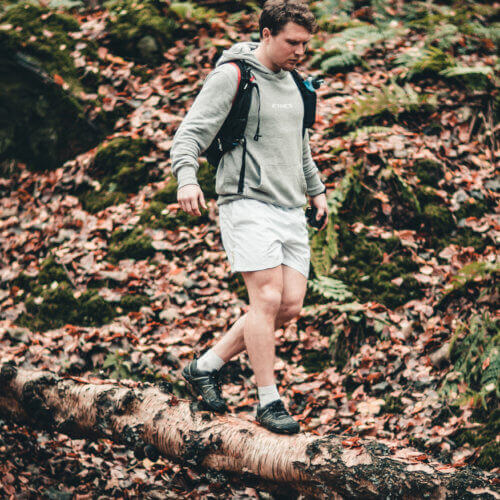
Want to improve your health AND have fun? Take a hike! Hiking has significant health benefits. Here are just 5: Hiking on rugged trail surfaces is a natural way to engage your core muscles, Burn calories -- Hiking on uneven terrain increases the amount of energy used by your body by 28 percent compared to walking on flat ground, Get strong -- Hiking helps to strengthen often neglected muscles in your hips, knees, ankles, and feet to improve balance and stability, Hiking is good for your brain: research shows that time spent in natural environments engages all five senses and calms brain activity, Instant meditation -- just being out in mother nature reduces your mind’s tendency to get stuck on negative, self-focused thought patterns – resulting in a happier, healthier you! So, go on a hike! Your body and mind will thank you. The content of this post does not constitute and is not intended to be a substitute for professional medical advice, diagnosis or treatment. Always seek the advice of a physician or other qualified health provider with any questions or concerns you may have about your health or a medical condition.
Wearing Xero Shoes can build foot strength
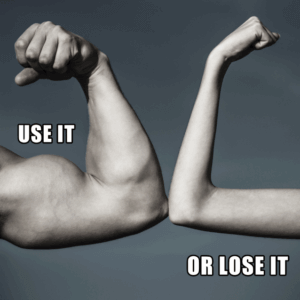
A study by a team led by Drs. Sarah Ridge and Marc Olsen showed that merely walking in minimalist shoes built foot muscle strength as much as doing a foot strengthening exercise program.That study didn't use Xero Shoes, but Dr. Ridge says that wearing Xero Shoes should give the same benefit as the ones used in the study.This shouldn't be a surprise.We know the "use it or lose it" principle.When it comes to bodies -- "using it" can build strength. Not using it can reduce strength, can make you "lose it."Let's dive into "losing it" for a second:Think about what happens if you put your arm in a cast, immobilizing the elbow joint so the muscles around it don't get used.What happens when you remove the cast after a few weeks?The arm muscles have atrophied. You've "lost it."Well, we think the same thing happens if you're wearing a shoe that doesn't let the many joints in your feet move, and get used, naturally.In fact, a study by Katrina Protopapas showed exactly that. "Supporting" the foot's arch by adding arch supporting insoles reduced foot muscle size by as much as 17% in just 12 weeks.If you've been wearing a shoe that inhibits natural motion, it's like putting your foot in a cast. Losing it.Again, it should't be a shock that if you've weakened your feet in "normal" shoes -- with or without an orthotic -- going back to USING your feet in footwear that lets them bend, flex, and move naturally, can build strength.And that's what Dr. Ridge's study shows.We can't think of a time where weaker is better than stronger.That's why we can't wait to hear your "using it" story when you wear Xero Shoes.
Running Form - learning from robots, kids, and ice
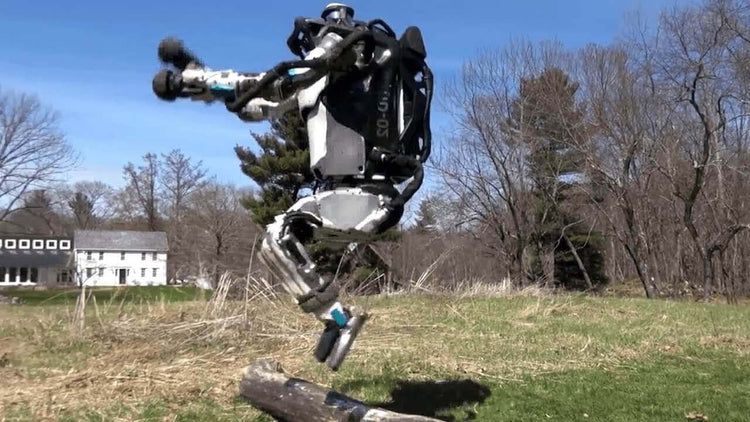
Physics. It's not just a good idea, it's the law.Want to improve your running technique?I have three suggestions: Watch robots run Watch little kids run Learn to run on ice! Running RobotsThe gang at Boston Dynamics are creating robots that do AMAZING things. For one, check out this one:Oh, sure, it's not going to win any races, but what do you notice about its running form?Look at where the foot lands in relation to the body.Is it reaching out in front of the body ("overstriding")? Nope.It's landing, basically, with the foot under the center of mass.This is the most important thing to emulate.You may also notice that this robot contacts the ground with its forefoot first. It doesn't land heel-first. It doesn't land flat footed.Research from Harvard's Dr. Irene Davis suggests that this is the optimal way for humans to land also. Why? Because you're putting the foot and ankle in the optimal position to give you strength, structure, and shock absorption.You know who else runs like this?KIDS!Especially kids who haven't spent much (or any) time in shoes.Take a look at this video. Especially the youngest, littlest kids at the back. Not every stride is perfect (nor should it be... they are, after all, on a non-flat surface), but you'll see that they're landing much like the way the robot does.Forefoot first. Foot under their center of mass.And, perhaps more importantly, it looks like they're having FUN!I also love when the littlest one stops for a few moments because he's "done," then starts again when he's ready to go.Running on Ice!I'm often asked how to run/walk/hike without slipping.Actually, what I'm asked is "Can you make a shoe or sandal that's totally slip resistant?"In short, No.Like I said at the start of this post: Physics is the law.There is no material that can prevent slipping under all conditions.Even the materials that help have limitations and trade-offs. For example, typically, the grippier the sole, the faster it wears out.But you can prevent slipping almost regardless of the sole's composition, or even the surface you're on.How?By doing the same thing that robots and little kids do: Land with your foot UNDER your center of mass (or as close as you can get).One demonstration of this is running on ice.Check out these two videos:In the first video, the runner builds to his full speed on carpet, then holds that speed on ice. In the second, the runner is even able to build speed with proper foot placement.This works because landing with your foot under your body reduces horizontal forces enough to eliminate slipping.A word about slipping in sandalsSometimes people will tell me that their sandal doesn't slip, but their foot slips across the sandal.This is caused by the same issue -- landing with your foot too far away from your body.In that case, the sandal hits the ground and stops while your foot is continuing to move.Landing with your foot under your body, like our kids, robots, and ice-runners, will take care of this, too. Let me know what you discover as you become a child-like robot on ice!

Can't Find the Size, Color, or Style You Want? Here's why...
We know that some people are upset because we may not have the size, or color, or style of the Xero Shoe that they want. Huge apologies. Clearly, it's not our intention to run out of inventory and be unable to replace it in a timely manner. It's happening for a few reasons, that I describe in this video: Before I jump into the details, I'll let you know we have more Prio and TerraFlex on the way. We don't yet have a firm date for their arrival though. Okay, so why can't you always get the Xero Shoes you want? In short, the biggest cause is how fast we're growing! When we bring in a new product, or even bring in more of an existing product, we're basically guessing how well it's going to sell. No company has ever gotten this formula perfect. If they did, there would be no TJ Maxx or Ross or Marshall's or any of the other overstock and closeout stores. But this is especially challenging for a new and rapidly-growing company like ours. When we're wrong -- when demand is WAY greater than we expected -- the issue morphs to one of timing and minimums. When it comes to timing, it can take 90-120 days or more from the moment we place an order for product until it arrives in our warehouse (and that's assuming there's not a strike at the port, or that our container didn't fall off the ship mid-ocean, or any other crazy scenario). Thinking about our Genesis sandal -- it sold 4x faster than we expected. If we ordered more now, we wouldn't get that shipment until winter. Not the best time to get a ton of sandals in the warehouse. Holding onto that inventory until sandal season picks up again creates a serious cash flow issue. So, for that product, we can't responsibly bring in more until 2020. Then, there are the minimums. We can't simply call our factory and ask for a couple hundred pairs to fill in for a size or color that we've run out of. The minimum number of pairs we can order is in the thousands. The problem this creates relates back to timing. That is, if that minimum is, say 8 months' worth of inventory, but we were planning to to update the product in 5 months -- by launching a new color, or making some tweaks to improve the product -- then we'd be sitting on 3 months' worth of product that we might not be able to sell. Again, a company our size, bootstrapped by me and Lena, without venture capital funding, can be sunk by that kind of situation. And we want this ship to keep sailing. I hope you're starting to understand the complicated calculus of managing inventory. It's what keeps Lena and I up at night. We know that when we outgrow this "awkward teenage" phase of our business, problems like this will become less likely. And we hope that the new products we bring in will excite you enough to make the memories of out-of-stock issues fade into the background (get yours before they sell out! ;-) ). To hear about when we get "fill-in" inventory, make sure you've joined our newsletter list (see the bottom of this page) or joined the Xero Circle (top right in the navigation section of the page). As always, Lena and I greatly appreciate your support and hope that you stick with us through our growing pains. Make sure you've joined the Xero Circle (which, among other things, gets our newsletter into your e-hands) to hear about when we get more (and NEW) inventory. Click the link in the menu at the top-right of this page.
Leg Length Difference and Barefoot Running
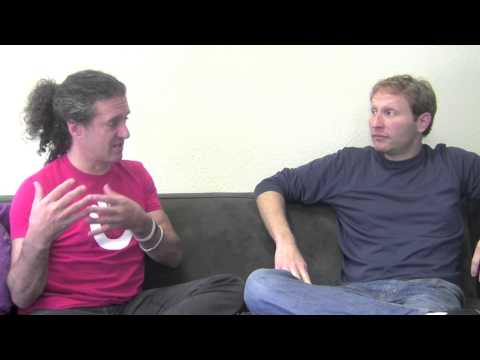
Can you run barefoot if your legs are different lengths?This is a question I get at least once a week. And I think the answer may be surprising.Watch this video that I made with Joshua Gordon about barefoot running technique and leg length issues (and a LOT more). Then leave a comment below with your thoughts.EnjoyThe content of this post does not constitute and is not intended to be a substitute for professional medical advice, diagnosis or treatment. Always seek the advice of a physician or other qualified health provider with any questions or concerns you may have about your health or a medical condition.
Harvard's Guide to Healthy Feet - Are you doing what they say?
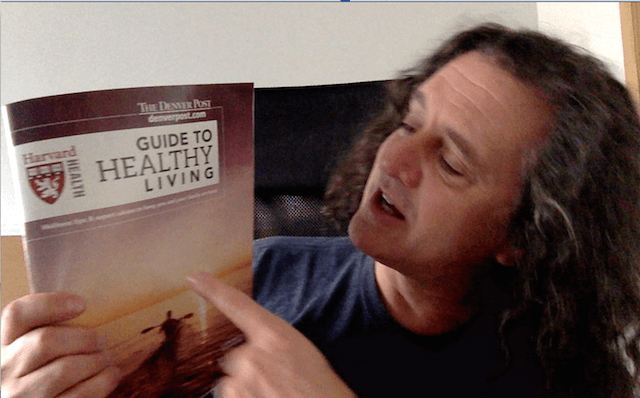
Our local newspaper, the Denver Post included an insert, The Harvard Health Guide to Healthy Living. Lots of great info in there, but my favorite is the section, Keeping Your Feet Healthy. What does it recommend? Check out this video for a few highlights and my commentary. And if you want to read the transcript instead of watching, it's below the video. What do you think? Are you doing what Harvard recommends? Add your comments, below. Download the article here Transcript Hi, Steven Sashen here from xeroshoes.com to talk about something that I got in the newspaper as an insert the other week. It is the Harvard Health Guide to Healthy Living. There's a lot of great information in here but there's one section that I really want to talk about, and let's take a look at that, shall we? It's the "Guide to Keeping Your Feet Healthy." Now, in this guide to keeping your feet healthy, there are a couple of highlights that I really want to point out and here's the first one. Read down here under Foot Fitness, “Exercising your feet on a regular basis not only improves overall foot health but may reduce your risk for injury,” and here's the highlighted part, “Walking is the best overall foot exercise. When you walk, you put your foot through its full range of motion from the time your heel hits the ground until you lift off with your toes.” Okay, first of all, love the idea of putting your foot through its full range of motion, love the idea of walking, have a big issue with that phrase “heel hits the ground.” You don’t want your heel to hit the ground. You want your heel to contact the ground. You want to use your foot. You want your heel to touch the ground but you don’t want it slamming down. So what you end up wanting to do, what you actually want to do, is have your foot land kind of underneath your body rather than way out in front of your body. If you reach way out with your foot, you'll slam your heel into the ground and that'll cause what’s called an impact transient force spike through all of your joints. What you want to do instead is let your foot land underneath you. You may be a little flatfooted, you may land on your midfoot, you might even land on your forefoot – suffice it to say, you don’t want to slam your heel. You don’t want to hit your heel. You want your heel to contact the ground naturally. Now, the next part, “letting your foot go through its full range of motion.” In order for your foot to go through its full range of motion, you need a shoe that lets your foot go through its full range of motion. If you have a stiff shoe with a really high heel, it can't go through its full range of motion. With a high heel, your heel’s already way up and you don’t get that plantar flexion. You don’t get that toe coming towards your knee that is part of the full range of motion in your ankle. And if the shoe itself is stiff, your foot can't move properly. You have one-quarter of the bones and joints of your entire body in your foot and ankle and you want to have a shoe flexible enough to take advantage of that. So for example, our Xero Shoes. This is our Xero Shoes Prio. It is a running fitness shoe. People use this for road-running, trail-running, CrossFit, yoga, gym-going, pretty much anything you can think of. Of course, casual wear as well. And when it comes to not elevating your heel so that you can get that full range of motion and the plantar flexion—you can see the heel is not elevated—when it comes to letting your foot bend, move and flex naturally, well, let's just do this. Yeah, that'll do it. And that amount of flexibility is not unique to our Prio. All Xero Shoes do that. This is our Z-Trail sandal. Think Chaco, Teva, Keen, but this thing weighs one-quarter as much and is much, much thinner and, as you can see, does that same crazy flexible rolling thing that lets your foot move through its full range of motion. Even our casual shoes—this is our Hana men’s casual canvas shoe—same thing, just as flexible as all Xero Shoes because natural foot motion is so important to us. Thank you, Harvard, for telling everyone else that it's important for them as well. Alright, let's go into the next point: “Basic steps to help prevent many foot problems – buy shoes that fit well with low heels and plenty of room for your toes.” Well, I already talked about the low heel part. Not only are Xero Shoes a non-elevated zero-drop heel, but they're also non-elevated. This is a low-to-the-ground sole for balance and agility. You might hear about some shoes that are zero-drop—means they don’t elevate your heel, which messes with your posture—but they're still an inch, two inches off the ground. You don’t want that. You want something low to the ground for balance and agility. And when it comes to plenty of room for your toes, think about most of the shoes that you have that are pointy and squeeze your toes together – Xero Shoes, on the other hand, have a nice wide toe box so your toes can spread and relax and splay and move naturally. And again, true on our sandals, true on our casual shoes. It's one of the core principles we believe in, is natural fit, letting your toes bend, relax, flex, and splay naturally. Let's take a look at the last point: “Make sure your shoes provide enough support but allow your feet to breathe.” Okay, let's talk about support. Many people think they need arch support. "You must have arch support." You go to a doctor and he'll tell you, that if you have any problem, you need arch support. Well, what does support actually do? It actually stops your foot from moving. Go back to that putting your foot through its full range of motion. When you have something supporting your arch, it can't actually move through the full range of motion. More, think about the idea of support in general. You're keeping the foot from moving. You're basically putting it in a cast. Imagine putting your arm in a cast. When it comes out of the cast, it's not stronger, it's not healthy, it's not flexible. It's weak. It's atrophied. In fact, there is a company that had a trade show booth next to us. They made insoles for your shoes and they had a drawing of a bare foot and then a drawing of a bare foot with their insole thing, and it said “37% less stress, instantly!” And I said, “By stress, are you measuring muscle activation with an EMG, an electromyograph?” And they said, “Well, yes,” very proudly. And I said, “So what you're saying is, the moment I step on that insole of yours my muscles are working 40% less, so I'm getting almost 40% weaker just by standing on that insole. Wouldn't it be better if I had 100% less stress by putting my foot in a cast or a foot coffin and never moving it at all?” and they did not have a good answer for that. An arch — think about it — architecturally, it is the strongest structure there is. You can put enormous amounts of pressure on it from the top and it's totally stable. What makes an arch fall apart? Supporting it, pushing it up from the bottom, the whole thing falls apart. You don’t need arch support, 99.9% of people. You don’t need arch support. You need strong arches. Whether you have flat feet or high arches, strength is the important thing, not support. And the way you get strength? Let's go back to where it says walking is one of those best forms of exercises. Move your foot through the full range of motion. Running, too, as long as you can move your foot through its full range of motion. So that's my little rant about support. And let's talk about breathing. Breathing isn't just about having a breathable upper so that you can get air in there, which these have. It's just about letting your foot have the space to move. That's why “breathe” is in quotes. And again, nice wide toe box, nice and wide across the midstep as well, or the instep as well. So Xero Shoes are designed so that you get a great comfortable fit that lets your feet move naturally. So that's the basic thing I wanted to share with you. I want to thank Harvard for putting out the Harvard Guide to Health Living and for having people who are wonderfully smart and talk about actually using your feet naturally instead of binding them up in foot coffins and having them get weaker and weaker over time. If you have any questions, drop us a line or check out Xero Shoes at xeroshoes.com. And as we always love to say, Live Life Feet First" The content of this post does not constitute and is not intended to be a substitute for professional medical advice, diagnosis or treatment. Always seek the advice of a physician or other qualified health provider with any questions or concerns you may have about your health or a medical condition.

The Important Barefoot Running Blister
Getting a blister from barefoot running was the best thing that could have ever happened to me.Let me back up and tell you the whole story so you can understand why.On my second barefoot run ever, I was so fascinated by the sensations, and so transfixed by experimenting to see the effects of different stride patterns, that I didn’t even notice I had run 5k. Now that may not sound like much to you ultra-marathon guys, but I’m a sprinter. I’d never run more than a mile before!About 20 minutes after the run, though, I noticed that I had a big blister on the ball of my left foot, under my 2nd toe.It wasn’t lost on me that I only had a blister on one foot. And it was particularly interesting that it was my left foot, because most of the injuries I’d been getting (the ones that inspired me to try barefoot running, with the hope it would cure me), were in my left leg.Clearly, I was doing something with my left leg that caused the blister, something I wasn’t doing with my right leg, which felt fine.A week later, I went out for another barefoot run, well before the blister had fully healed. I thought that I’d experiment some more and see if I could run in a way that didn’t hurt. And, I figured, if I couldn’t find a way to run pain-free in about ten minutes, I’d just stop and try again when the blister was gone.As a ran, I kept thinking, “How can I stop doing with my left leg what I’m already not doing with my right?” But no luck. For the first nine minutes of that run I was in pain. I couldn’t find a way to move my leg, or meet the ground, that didn’t hurt.I put my attention on my good leg, my right leg, and wondered, “How can I just do THIS, whatever that is, with my left leg?”About a minute later, something changed.At the time, I didn’t know what it was, all I knew is that I was able to run without my left foot hurting. I wasn’t doing whatever it was that caused the blister in the first place.And, simultaneously, I started running easier, faster, lighter and with less effort than I ever had. I finished the run (only about 3k this time, but still…) and felt fine.That was the last time I’ve been injured from running.What changed? I know now that I was doing 3 things:Overstriding (reaching out with my foot rather than placing it under — or closer to — my center of mass) Pulling my foot towards me (which puts strain on the hamstring) Pushing off with my foot with a slight “pawing back” motion (instead of placing my foot then lifting it off the ground) I don’t recommend getting blisters, but one of the best things about barefoot running is that you learn to listen to the feedback — sensations — you get, and use those to coach yourself to become a better runner. It’s an ongoing process of continual improvement.That blister was the best thing that ever happened to me as a runner.The content of this post does not constitute and is not intended to be a substitute for professional medical advice, diagnosis or treatment. Always seek the advice of a physician or other qualified health provider with any questions or concerns you may have about your health or a medical condition.
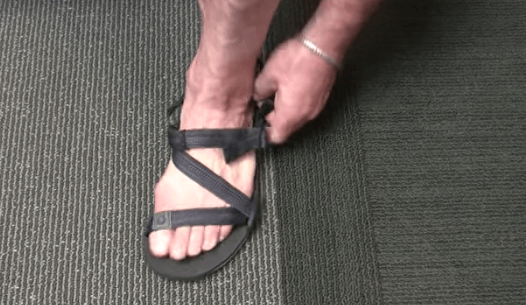
How to Adjust Xero Shoes Sandals for a Perfect Fit
To get a just-right fit for your sandals, follow the instructions below. And if you need more help, feel free to reach out to our Customer Happiness Team at support@xeroshoes.eu. For all of our sandals, you want to aim for "snug but comfortable." Z-Trek and Z-Trail sport sandals Cloud, Genesis (and Venture) huarache-style thong sandals Veracruz sandal Shortening the laces on the Cloud, Genesis (and Venture) If you tighten your heel lacing and end up with "too much lace", you can shorten the laces by following these instructions:
Flat Feet, High Arches, and Running Barefoot
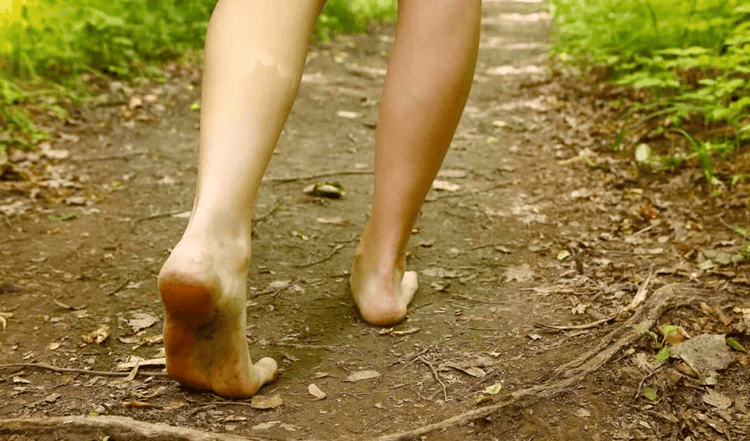
Not infrequently, when the topic of barefoot running comes up, or someone takes a look at my Xero Shoes, whomever I'm speaking with will say:I can't do that. I need support.Oh? I'll respond. Why do you need support?Then something happens that I love. I get one of two seemingly contradictory answers. Either: "I have flat feet!" "I have high arches!" They usually like to add to their proclamation some form of external validation. Like, "I've seen one of the best podiatrists in the world and he agrees that I need orthotics."Oh? He agrees that you need to spend an additional $300-1,000 with him? What a shock.From the perspective of barefoot runners and researchers, high arches and flat feet are not a problem.First of all, the height of your arch is largely genetically determined.Secondly, the problem isn't your arch height, or lack thereof, but whether your arches are STRONG.That is, the "cure" for the problem is not putting your foot in a cast (which is essentially what an orthotic is), it's using it, working on strengthening it.One reason that running in bare feet could help strengthen your feet and arches is that landing with a mid-foot or forefoot strike can actually engage the muscles in your feet.Think about it: When does immobilizing something make it stronger? Never!Personally, I had flat feet my whole life. If I stepped out of a pool, my footprint looked like an oval. After a few months of running and walking barefoot, I started developing arches! I ruined all the family jokes about the flippers I had at the end of my legs.Now, I get out of the water, step on the ground, and you see the outline of a FOOT. Granted, I don't have drive-a-bus-under-them arches but, again, that's genes. All I know is that I haven't used my expensive shoe inserts in years and my feet haven't had problem in all that time.
How To Run Barefoot
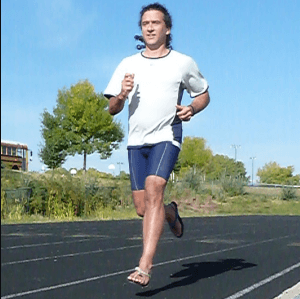
"How do I start barefoot running?" "What's the best book/course/coach for learning to run barefoot?" "Can you show me what barefoot running form looks like?" I get these questions a lot. And, frankly, I don't want to answer them. In fact, I've resisted writing this post for, well, months. Here's why (in no particular order, even though I'm using numbers to delineate my reasons): Frankly, if all you did was take off your shoes, go for a run, stop when it hurts, and experiment to find ways of running that don't hurt, you would learn more than I, or anyone else, could tell you. Those of us who've observed barefoot runners and coached barefoot running are starting to notice the obvious: different runners have different form. That is, when you look at the BEST runners, they may have a few things in common, but they're not all doing the same thing. So, I don't want to say something that isn't going to be relevant for YOU. To be totally candid, I'm in an awkward political situation -- as a guy who sells "barefoot-style" footwear, and who would like to have ALL the coaches referring their clients to me, I can't single out one coach/book/technique over another (or one "under" another, either). I can tell you that if you listen to ALL of them, and then follow a bit of advice I'll give, below, you'll appreciate each coach for his/her unique contribution to you barefoot running form. Many runners aren't aware of what their bodies are actually doing, so certain recommendations won't be effective anyway. If I say to you, "don't land on your heels," and show you a video of how you're "supposed" to land on your foot, you may be 100% convinced that you're doing what I suggested, and then a video might show that you are totally heel-striking. In other words, what I say will be less important than what you learn on your own. That said, here's some thoughts about getting started with running bare footed. Realize that the best coach you have is YOU and your sensations and whatever you can learn from watching video of yourself (especially slow motion video). In fact, you MUST become your own best coach, because no external coach will be there for every situation you'll encounter as a runner. If you can't listen to yourself, make adjustments in what you're doing, and know when to STOP... no other coach will be helpful anyway. Start SLOWLY and build up. Check out my post about getting started with barefoot running. There's no rush in making the transition to barefoot running. And there's no way to predict how long it will take YOU. Remember that this is a never-ending process that you can always improve. To be slightly more specific and technical, and tell you some of what you would discover on your own with enough time and attention: Hard, smooth surfaces are the best for learning. They give you the most feedback. You want to land mid-foot or fore-foot. Do NOT reach out with your foot to do this; that's the opposite of what you want to do. You don't need to stay on the balls of your feet and put extra strain on your calves and Achilles tendons. Once you land on the ball/midfoot, you can let your heel drop if it feels better to do that, and it will feel better/worse depending on whether you're going uphill or downhill or on a flat, and depending on what speed you're running. Don't PULL your foot toward you, or PUSH it behind you... that'll cause blisters as well as put extra strain on your hamstrings (pulling) and calves (pushing). Think, instead, about PLACING your foot on the ground and LIFTING it off. And lift by using your hip flexor. That is, think about lifting your foot off the ground by lifting up your knee, not by pushing off the ground. Aim for having your feet land more "under your body" than you're probably used to. Landing with your foot out in front of you too much is "overstriding" and it's one of the habits that most of us need to work to overcome. You may need to even exaggerate this to get the feel of it -- put your feet "behind you" when you land. You won't actually be able to do this, but if you try it will highlight what overstriding feels like... and the correct place to put your feet is probably somewhere in between. Un-Plop your feet. This is hard to describe, but many of us slam our feet into the ground, or wait for the ground to hit our feet. We plop them onto the ground instead of meeting the ground lightly. There are a lot of "cues" coaches use to teach this: Pretend you're running on hot coals, or on thin ice, or trying to sneak up on a deer, or that your feet are wheels and you want them to touch where the wheel meets the ground, or that the ground is moving below you like a treadmill and you want to move your feet at the same speed as the treadmill. You will need to find your own way to feel this. Core tight... when you run, your body is a spring. If you collapse in your midsection, you're weakening the spring and making it less efficient and, therefore, making it harder to run. Pick up your cadence. Most people think 180 steps-per-minute is some magic number. It's not. Some successful runners do more, some do less. The point of moving your feet faster than you're probably used to is that it gives you less time to keep your feet on the ground... and that'll help you learn to place/lift, "un-plop" and not overstride. LISTEN... if you're running loudly, if you make a lot of noise when your feet hit the ground, you're doing one of the above incorrectly. This is true if you're barefoot, in Xero Shoes, or any other footwear. You can run quietly (not silently), and quiet running is usually a sign of good form. WONDER! When I run, I keep a question in my mind, "How can I make this lighter, easier, and more fun... and, sometimes, faster?" Then, I experiment and see what I can find. Then, most importantly: REST. Bodies get stronger when you let them rest. There are no bonus points for not taking a day off. HAVE FUN! If it's not fun, do something different. Try a different surface, a different speed, a different reason for running (compete if you haven't before, do an obstacle course if you're usually all about putting in mile after mile). I'm sure others of you have other simple pointers. Can't wait to hear them. Oh, and did I mention, barefoot running can be, should be, and IS (once you get it) FUN... don't forget that! The content of this post does not constitute and is not intended to be a substitute for professional medical advice, diagnosis or treatment. Always seek the advice of a physician or other qualified health provider with any questions or concerns you may have about your health or a medical condition.