latest News
Wearing Xero Shoes can build foot strength
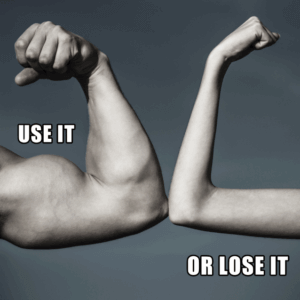
A study by a team led by Drs. Sarah Ridge and Marc Olsen showed that merely walking in minimalist shoes built foot muscle strength as much as doing a foot strengthening exercise program.That study didn't use Xero Shoes, but Dr. Ridge says that wearing Xero Shoes should give the same benefit as the ones used in the study.This shouldn't be a surprise.We know the "use it or lose it" principle.When it comes to bodies -- "using it" can build strength. Not using it can reduce strength, can make you "lose it."Let's dive into "losing it" for a second:Think about what happens if you put your arm in a cast, immobilizing the elbow joint so the muscles around it don't get used.What happens when you remove the cast after a few weeks?The arm muscles have atrophied. You've "lost it."Well, we think the same thing happens if you're wearing a shoe that doesn't let the many joints in your feet move, and get used, naturally.In fact, a study by Katrina Protopapas showed exactly that. "Supporting" the foot's arch by adding arch supporting insoles reduced foot muscle size by as much as 17% in just 12 weeks.If you've been wearing a shoe that inhibits natural motion, it's like putting your foot in a cast. Losing it.Again, it should't be a shock that if you've weakened your feet in "normal" shoes -- with or without an orthotic -- going back to USING your feet in footwear that lets them bend, flex, and move naturally, can build strength.And that's what Dr. Ridge's study shows.We can't think of a time where weaker is better than stronger.That's why we can't wait to hear your "using it" story when you wear Xero Shoes.
Running Form - learning from robots, kids, and ice
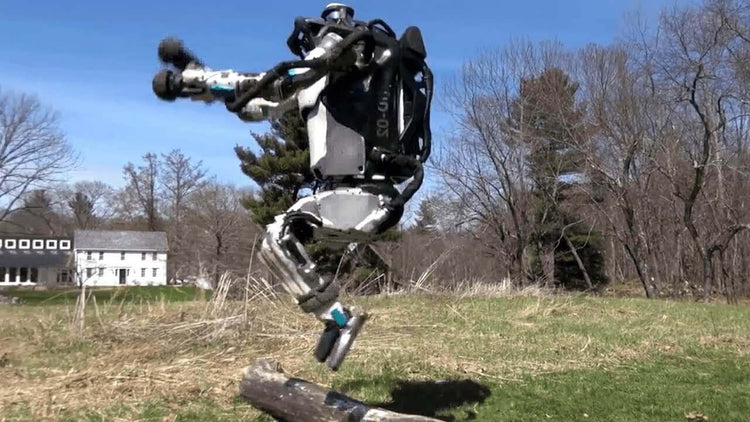
Physics. It's not just a good idea, it's the law.Want to improve your running technique?I have three suggestions: Watch robots run Watch little kids run Learn to run on ice! Running RobotsThe gang at Boston Dynamics are creating robots that do AMAZING things. For one, check out this one:Oh, sure, it's not going to win any races, but what do you notice about its running form?Look at where the foot lands in relation to the body.Is it reaching out in front of the body ("overstriding")? Nope.It's landing, basically, with the foot under the center of mass.This is the most important thing to emulate.You may also notice that this robot contacts the ground with its forefoot first. It doesn't land heel-first. It doesn't land flat footed.Research from Harvard's Dr. Irene Davis suggests that this is the optimal way for humans to land also. Why? Because you're putting the foot and ankle in the optimal position to give you strength, structure, and shock absorption.You know who else runs like this?KIDS!Especially kids who haven't spent much (or any) time in shoes.Take a look at this video. Especially the youngest, littlest kids at the back. Not every stride is perfect (nor should it be... they are, after all, on a non-flat surface), but you'll see that they're landing much like the way the robot does.Forefoot first. Foot under their center of mass.And, perhaps more importantly, it looks like they're having FUN!I also love when the littlest one stops for a few moments because he's "done," then starts again when he's ready to go.Running on Ice!I'm often asked how to run/walk/hike without slipping.Actually, what I'm asked is "Can you make a shoe or sandal that's totally slip resistant?"In short, No.Like I said at the start of this post: Physics is the law.There is no material that can prevent slipping under all conditions.Even the materials that help have limitations and trade-offs. For example, typically, the grippier the sole, the faster it wears out.But you can prevent slipping almost regardless of the sole's composition, or even the surface you're on.How?By doing the same thing that robots and little kids do: Land with your foot UNDER your center of mass (or as close as you can get).One demonstration of this is running on ice.Check out these two videos:In the first video, the runner builds to his full speed on carpet, then holds that speed on ice. In the second, the runner is even able to build speed with proper foot placement.This works because landing with your foot under your body reduces horizontal forces enough to eliminate slipping.A word about slipping in sandalsSometimes people will tell me that their sandal doesn't slip, but their foot slips across the sandal.This is caused by the same issue -- landing with your foot too far away from your body.In that case, the sandal hits the ground and stops while your foot is continuing to move.Landing with your foot under your body, like our kids, robots, and ice-runners, will take care of this, too. Let me know what you discover as you become a child-like robot on ice!

Can't Find the Size, Color, or Style You Want? Here's why...
We know that some people are upset because we may not have the size, or color, or style of the Xero Shoe that they want. Huge apologies. Clearly, it's not our intention to run out of inventory and be unable to replace it in a timely manner. It's happening for a few reasons, that I describe in this video: Before I jump into the details, I'll let you know we have more Prio and TerraFlex on the way. We don't yet have a firm date for their arrival though. Okay, so why can't you always get the Xero Shoes you want? In short, the biggest cause is how fast we're growing! When we bring in a new product, or even bring in more of an existing product, we're basically guessing how well it's going to sell. No company has ever gotten this formula perfect. If they did, there would be no TJ Maxx or Ross or Marshall's or any of the other overstock and closeout stores. But this is especially challenging for a new and rapidly-growing company like ours. When we're wrong -- when demand is WAY greater than we expected -- the issue morphs to one of timing and minimums. When it comes to timing, it can take 90-120 days or more from the moment we place an order for product until it arrives in our warehouse (and that's assuming there's not a strike at the port, or that our container didn't fall off the ship mid-ocean, or any other crazy scenario). Thinking about our Genesis sandal -- it sold 4x faster than we expected. If we ordered more now, we wouldn't get that shipment until winter. Not the best time to get a ton of sandals in the warehouse. Holding onto that inventory until sandal season picks up again creates a serious cash flow issue. So, for that product, we can't responsibly bring in more until 2020. Then, there are the minimums. We can't simply call our factory and ask for a couple hundred pairs to fill in for a size or color that we've run out of. The minimum number of pairs we can order is in the thousands. The problem this creates relates back to timing. That is, if that minimum is, say 8 months' worth of inventory, but we were planning to to update the product in 5 months -- by launching a new color, or making some tweaks to improve the product -- then we'd be sitting on 3 months' worth of product that we might not be able to sell. Again, a company our size, bootstrapped by me and Lena, without venture capital funding, can be sunk by that kind of situation. And we want this ship to keep sailing. I hope you're starting to understand the complicated calculus of managing inventory. It's what keeps Lena and I up at night. We know that when we outgrow this "awkward teenage" phase of our business, problems like this will become less likely. And we hope that the new products we bring in will excite you enough to make the memories of out-of-stock issues fade into the background (get yours before they sell out! ;-) ). To hear about when we get "fill-in" inventory, make sure you've joined our newsletter list (see the bottom of this page) or joined the Xero Circle (top right in the navigation section of the page). As always, Lena and I greatly appreciate your support and hope that you stick with us through our growing pains. Make sure you've joined the Xero Circle (which, among other things, gets our newsletter into your e-hands) to hear about when we get more (and NEW) inventory. Click the link in the menu at the top-right of this page.
Leg Length Difference and Barefoot Running
Can you run barefoot if your legs are different lengths?This is a question I get at least once a week. And I think the answer may be surprising.Watch this video that I made with Joshua Gordon about barefoot running technique and leg length issues (and a LOT more). Then leave a comment below with your thoughts.EnjoyThe content of this post does not constitute and is not intended to be a substitute for professional medical advice, diagnosis or treatment. Always seek the advice of a physician or other qualified health provider with any questions or concerns you may have about your health or a medical condition.

Harvard's Guide to Healthy Feet - Are you doing what they say?
Our local newspaper, the Denver Post included an insert, The Harvard Health Guide to Healthy Living. Lots of great info in there, but my favorite is the section, Keeping Your Feet Healthy. What does it recommend? Check out this video for a few highlights and my commentary. And if you want to read the transcript instead of watching, it's below the video. What do you think? Are you doing what Harvard recommends? Add your comments, below. Download the article here Transcript Hi, Steven Sashen here from xeroshoes.com to talk about something that I got in the newspaper as an insert the other week. It is the Harvard Health Guide to Healthy Living. There's a lot of great information in here but there's one section that I really want to talk about, and let's take a look at that, shall we? It's the "Guide to Keeping Your Feet Healthy." Now, in this guide to keeping your feet healthy, there are a couple of highlights that I really want to point out and here's the first one. Read down here under Foot Fitness, “Exercising your feet on a regular basis not only improves overall foot health but may reduce your risk for injury,” and here's the highlighted part, “Walking is the best overall foot exercise. When you walk, you put your foot through its full range of motion from the time your heel hits the ground until you lift off with your toes.” Okay, first of all, love the idea of putting your foot through its full range of motion, love the idea of walking, have a big issue with that phrase “heel hits the ground.” You don’t want your heel to hit the ground. You want your heel to contact the ground. You want to use your foot. You want your heel to touch the ground but you don’t want it slamming down. So what you end up wanting to do, what you actually want to do, is have your foot land kind of underneath your body rather than way out in front of your body. If you reach way out with your foot, you'll slam your heel into the ground and that'll cause what’s called an impact transient force spike through all of your joints. What you want to do instead is let your foot land underneath you. You may be a little flatfooted, you may land on your midfoot, you might even land on your forefoot – suffice it to say, you don’t want to slam your heel. You don’t want to hit your heel. You want your heel to contact the ground naturally. Now, the next part, “letting your foot go through its full range of motion.” In order for your foot to go through its full range of motion, you need a shoe that lets your foot go through its full range of motion. If you have a stiff shoe with a really high heel, it can't go through its full range of motion. With a high heel, your heel’s already way up and you don’t get that plantar flexion. You don’t get that toe coming towards your knee that is part of the full range of motion in your ankle. And if the shoe itself is stiff, your foot can't move properly. You have one-quarter of the bones and joints of your entire body in your foot and ankle and you want to have a shoe flexible enough to take advantage of that. So for example, our Xero Shoes. This is our Xero Shoes Prio. It is a running fitness shoe. People use this for road-running, trail-running, CrossFit, yoga, gym-going, pretty much anything you can think of. Of course, casual wear as well. And when it comes to not elevating your heel so that you can get that full range of motion and the plantar flexion—you can see the heel is not elevated—when it comes to letting your foot bend, move and flex naturally, well, let's just do this. Yeah, that'll do it. And that amount of flexibility is not unique to our Prio. All Xero Shoes do that. This is our Z-Trail sandal. Think Chaco, Teva, Keen, but this thing weighs one-quarter as much and is much, much thinner and, as you can see, does that same crazy flexible rolling thing that lets your foot move through its full range of motion. Even our casual shoes—this is our Hana men’s casual canvas shoe—same thing, just as flexible as all Xero Shoes because natural foot motion is so important to us. Thank you, Harvard, for telling everyone else that it's important for them as well. Alright, let's go into the next point: “Basic steps to help prevent many foot problems – buy shoes that fit well with low heels and plenty of room for your toes.” Well, I already talked about the low heel part. Not only are Xero Shoes a non-elevated zero-drop heel, but they're also non-elevated. This is a low-to-the-ground sole for balance and agility. You might hear about some shoes that are zero-drop—means they don’t elevate your heel, which messes with your posture—but they're still an inch, two inches off the ground. You don’t want that. You want something low to the ground for balance and agility. And when it comes to plenty of room for your toes, think about most of the shoes that you have that are pointy and squeeze your toes together – Xero Shoes, on the other hand, have a nice wide toe box so your toes can spread and relax and splay and move naturally. And again, true on our sandals, true on our casual shoes. It's one of the core principles we believe in, is natural fit, letting your toes bend, relax, flex, and splay naturally. Let's take a look at the last point: “Make sure your shoes provide enough support but allow your feet to breathe.” Okay, let's talk about support. Many people think they need arch support. "You must have arch support." You go to a doctor and he'll tell you, that if you have any problem, you need arch support. Well, what does support actually do? It actually stops your foot from moving. Go back to that putting your foot through its full range of motion. When you have something supporting your arch, it can't actually move through the full range of motion. More, think about the idea of support in general. You're keeping the foot from moving. You're basically putting it in a cast. Imagine putting your arm in a cast. When it comes out of the cast, it's not stronger, it's not healthy, it's not flexible. It's weak. It's atrophied. In fact, there is a company that had a trade show booth next to us. They made insoles for your shoes and they had a drawing of a bare foot and then a drawing of a bare foot with their insole thing, and it said “37% less stress, instantly!” And I said, “By stress, are you measuring muscle activation with an EMG, an electromyograph?” And they said, “Well, yes,” very proudly. And I said, “So what you're saying is, the moment I step on that insole of yours my muscles are working 40% less, so I'm getting almost 40% weaker just by standing on that insole. Wouldn't it be better if I had 100% less stress by putting my foot in a cast or a foot coffin and never moving it at all?” and they did not have a good answer for that. An arch — think about it — architecturally, it is the strongest structure there is. You can put enormous amounts of pressure on it from the top and it's totally stable. What makes an arch fall apart? Supporting it, pushing it up from the bottom, the whole thing falls apart. You don’t need arch support, 99.9% of people. You don’t need arch support. You need strong arches. Whether you have flat feet or high arches, strength is the important thing, not support. And the way you get strength? Let's go back to where it says walking is one of those best forms of exercises. Move your foot through the full range of motion. Running, too, as long as you can move your foot through its full range of motion. So that's my little rant about support. And let's talk about breathing. Breathing isn't just about having a breathable upper so that you can get air in there, which these have. It's just about letting your foot have the space to move. That's why “breathe” is in quotes. And again, nice wide toe box, nice and wide across the midstep as well, or the instep as well. So Xero Shoes are designed so that you get a great comfortable fit that lets your feet move naturally. So that's the basic thing I wanted to share with you. I want to thank Harvard for putting out the Harvard Guide to Health Living and for having people who are wonderfully smart and talk about actually using your feet naturally instead of binding them up in foot coffins and having them get weaker and weaker over time. If you have any questions, drop us a line or check out Xero Shoes at xeroshoes.com. And as we always love to say, Live Life Feet First" The content of this post does not constitute and is not intended to be a substitute for professional medical advice, diagnosis or treatment. Always seek the advice of a physician or other qualified health provider with any questions or concerns you may have about your health or a medical condition.

The Important Barefoot Running Blister
Getting a blister from barefoot running was the best thing that could have ever happened to me.Let me back up and tell you the whole story so you can understand why.On my second barefoot run ever, I was so fascinated by the sensations, and so transfixed by experimenting to see the effects of different stride patterns, that I didn’t even notice I had run 5k. Now that may not sound like much to you ultra-marathon guys, but I’m a sprinter. I’d never run more than a mile before!About 20 minutes after the run, though, I noticed that I had a big blister on the ball of my left foot, under my 2nd toe.It wasn’t lost on me that I only had a blister on one foot. And it was particularly interesting that it was my left foot, because most of the injuries I’d been getting (the ones that inspired me to try barefoot running, with the hope it would cure me), were in my left leg.Clearly, I was doing something with my left leg that caused the blister, something I wasn’t doing with my right leg, which felt fine.A week later, I went out for another barefoot run, well before the blister had fully healed. I thought that I’d experiment some more and see if I could run in a way that didn’t hurt. And, I figured, if I couldn’t find a way to run pain-free in about ten minutes, I’d just stop and try again when the blister was gone.As a ran, I kept thinking, “How can I stop doing with my left leg what I’m already not doing with my right?” But no luck. For the first nine minutes of that run I was in pain. I couldn’t find a way to move my leg, or meet the ground, that didn’t hurt.I put my attention on my good leg, my right leg, and wondered, “How can I just do THIS, whatever that is, with my left leg?”About a minute later, something changed.At the time, I didn’t know what it was, all I knew is that I was able to run without my left foot hurting. I wasn’t doing whatever it was that caused the blister in the first place.And, simultaneously, I started running easier, faster, lighter and with less effort than I ever had. I finished the run (only about 3k this time, but still…) and felt fine.That was the last time I’ve been injured from running.What changed? I know now that I was doing 3 things:Overstriding (reaching out with my foot rather than placing it under — or closer to — my center of mass) Pulling my foot towards me (which puts strain on the hamstring) Pushing off with my foot with a slight “pawing back” motion (instead of placing my foot then lifting it off the ground) I don’t recommend getting blisters, but one of the best things about barefoot running is that you learn to listen to the feedback — sensations — you get, and use those to coach yourself to become a better runner. It’s an ongoing process of continual improvement.That blister was the best thing that ever happened to me as a runner.The content of this post does not constitute and is not intended to be a substitute for professional medical advice, diagnosis or treatment. Always seek the advice of a physician or other qualified health provider with any questions or concerns you may have about your health or a medical condition.
How to Adjust Xero Shoes Sandals for a Perfect Fit
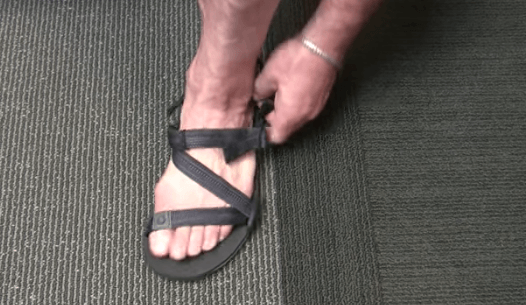
To get a just-right fit for your sandals, follow the instructions below. And if you need more help, feel free to reach out to our Customer Happiness Team at support@xeroshoes.eu. For all of our sandals, you want to aim for "snug but comfortable." Z-Trek and Z-Trail sport sandals Cloud, Genesis (and Venture) huarache-style thong sandals Veracruz sandal Shortening the laces on the Cloud, Genesis (and Venture) If you tighten your heel lacing and end up with "too much lace", you can shorten the laces by following these instructions:
Flat Feet, High Arches, and Running Barefoot
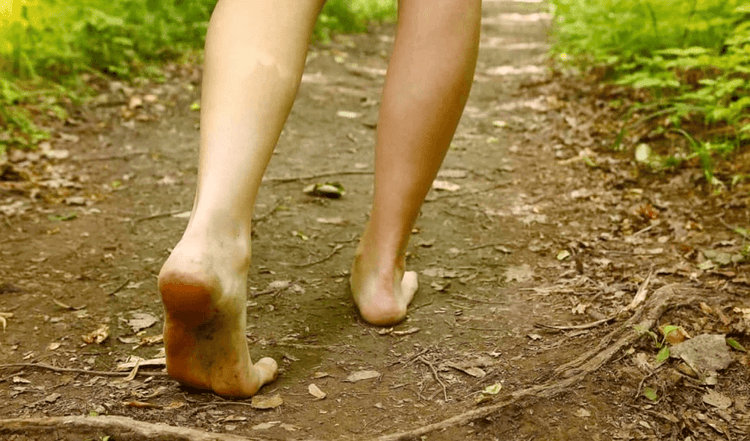
Not infrequently, when the topic of barefoot running comes up, or someone takes a look at my Xero Shoes, whomever I'm speaking with will say:I can't do that. I need support.Oh? I'll respond. Why do you need support?Then something happens that I love. I get one of two seemingly contradictory answers. Either: "I have flat feet!" "I have high arches!" They usually like to add to their proclamation some form of external validation. Like, "I've seen one of the best podiatrists in the world and he agrees that I need orthotics."Oh? He agrees that you need to spend an additional $300-1,000 with him? What a shock.From the perspective of barefoot runners and researchers, high arches and flat feet are not a problem.First of all, the height of your arch is largely genetically determined.Secondly, the problem isn't your arch height, or lack thereof, but whether your arches are STRONG.That is, the "cure" for the problem is not putting your foot in a cast (which is essentially what an orthotic is), it's using it, working on strengthening it.One reason that running in bare feet could help strengthen your feet and arches is that landing with a mid-foot or forefoot strike can actually engage the muscles in your feet.Think about it: When does immobilizing something make it stronger? Never!Personally, I had flat feet my whole life. If I stepped out of a pool, my footprint looked like an oval. After a few months of running and walking barefoot, I started developing arches! I ruined all the family jokes about the flippers I had at the end of my legs.Now, I get out of the water, step on the ground, and you see the outline of a FOOT. Granted, I don't have drive-a-bus-under-them arches but, again, that's genes. All I know is that I haven't used my expensive shoe inserts in years and my feet haven't had problem in all that time.
How To Run Barefoot
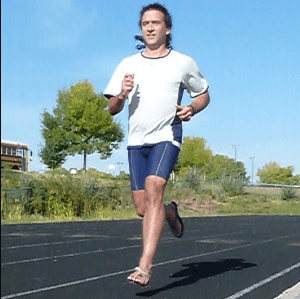
"How do I start barefoot running?" "What's the best book/course/coach for learning to run barefoot?" "Can you show me what barefoot running form looks like?" I get these questions a lot. And, frankly, I don't want to answer them. In fact, I've resisted writing this post for, well, months. Here's why (in no particular order, even though I'm using numbers to delineate my reasons): Frankly, if all you did was take off your shoes, go for a run, stop when it hurts, and experiment to find ways of running that don't hurt, you would learn more than I, or anyone else, could tell you. Those of us who've observed barefoot runners and coached barefoot running are starting to notice the obvious: different runners have different form. That is, when you look at the BEST runners, they may have a few things in common, but they're not all doing the same thing. So, I don't want to say something that isn't going to be relevant for YOU. To be totally candid, I'm in an awkward political situation -- as a guy who sells "barefoot-style" footwear, and who would like to have ALL the coaches referring their clients to me, I can't single out one coach/book/technique over another (or one "under" another, either). I can tell you that if you listen to ALL of them, and then follow a bit of advice I'll give, below, you'll appreciate each coach for his/her unique contribution to you barefoot running form. Many runners aren't aware of what their bodies are actually doing, so certain recommendations won't be effective anyway. If I say to you, "don't land on your heels," and show you a video of how you're "supposed" to land on your foot, you may be 100% convinced that you're doing what I suggested, and then a video might show that you are totally heel-striking. In other words, what I say will be less important than what you learn on your own. That said, here's some thoughts about getting started with running bare footed. Realize that the best coach you have is YOU and your sensations and whatever you can learn from watching video of yourself (especially slow motion video). In fact, you MUST become your own best coach, because no external coach will be there for every situation you'll encounter as a runner. If you can't listen to yourself, make adjustments in what you're doing, and know when to STOP... no other coach will be helpful anyway. Start SLOWLY and build up. Check out my post about getting started with barefoot running. There's no rush in making the transition to barefoot running. And there's no way to predict how long it will take YOU. Remember that this is a never-ending process that you can always improve. To be slightly more specific and technical, and tell you some of what you would discover on your own with enough time and attention: Hard, smooth surfaces are the best for learning. They give you the most feedback. You want to land mid-foot or fore-foot. Do NOT reach out with your foot to do this; that's the opposite of what you want to do. You don't need to stay on the balls of your feet and put extra strain on your calves and Achilles tendons. Once you land on the ball/midfoot, you can let your heel drop if it feels better to do that, and it will feel better/worse depending on whether you're going uphill or downhill or on a flat, and depending on what speed you're running. Don't PULL your foot toward you, or PUSH it behind you... that'll cause blisters as well as put extra strain on your hamstrings (pulling) and calves (pushing). Think, instead, about PLACING your foot on the ground and LIFTING it off. And lift by using your hip flexor. That is, think about lifting your foot off the ground by lifting up your knee, not by pushing off the ground. Aim for having your feet land more "under your body" than you're probably used to. Landing with your foot out in front of you too much is "overstriding" and it's one of the habits that most of us need to work to overcome. You may need to even exaggerate this to get the feel of it -- put your feet "behind you" when you land. You won't actually be able to do this, but if you try it will highlight what overstriding feels like... and the correct place to put your feet is probably somewhere in between. Un-Plop your feet. This is hard to describe, but many of us slam our feet into the ground, or wait for the ground to hit our feet. We plop them onto the ground instead of meeting the ground lightly. There are a lot of "cues" coaches use to teach this: Pretend you're running on hot coals, or on thin ice, or trying to sneak up on a deer, or that your feet are wheels and you want them to touch where the wheel meets the ground, or that the ground is moving below you like a treadmill and you want to move your feet at the same speed as the treadmill. You will need to find your own way to feel this. Core tight... when you run, your body is a spring. If you collapse in your midsection, you're weakening the spring and making it less efficient and, therefore, making it harder to run. Pick up your cadence. Most people think 180 steps-per-minute is some magic number. It's not. Some successful runners do more, some do less. The point of moving your feet faster than you're probably used to is that it gives you less time to keep your feet on the ground... and that'll help you learn to place/lift, "un-plop" and not overstride. LISTEN... if you're running loudly, if you make a lot of noise when your feet hit the ground, you're doing one of the above incorrectly. This is true if you're barefoot, in Xero Shoes, or any other footwear. You can run quietly (not silently), and quiet running is usually a sign of good form. WONDER! When I run, I keep a question in my mind, "How can I make this lighter, easier, and more fun... and, sometimes, faster?" Then, I experiment and see what I can find. Then, most importantly: REST. Bodies get stronger when you let them rest. There are no bonus points for not taking a day off. HAVE FUN! If it's not fun, do something different. Try a different surface, a different speed, a different reason for running (compete if you haven't before, do an obstacle course if you're usually all about putting in mile after mile). I'm sure others of you have other simple pointers. Can't wait to hear them. Oh, and did I mention, barefoot running can be, should be, and IS (once you get it) FUN... don't forget that! The content of this post does not constitute and is not intended to be a substitute for professional medical advice, diagnosis or treatment. Always seek the advice of a physician or other qualified health provider with any questions or concerns you may have about your health or a medical condition.
Do not "transition slowly" to Barefoot Running
The more time you spend around barefoot running and minimalist running -- the more articles you read in magazines and newspapers, the more interviews you hear with doctors or runners, the more stories you see on the news, the more websites you see about it, the more research you hear about it -- the more often you'll hear one particular admonition. Actually, if the piece is supportive of running barefoot, you'll hear it as a recommendation. If the piece is anti-barefoot, then it'll be a warning. And that bit of instruction/caution is: Transition to barefoot running SLOWLY. If you make the transition too quickly, you'll get hurt. Admittedly, even on this site I say something that could sound similar about how to start running barefoot. But to focus on how quickly or slowly you make the transition is to miss the point. Running barefoot safely and enjoyably isn't about whether it takes you a day, a week, or a year to do so. It's about HOW you make the transition, not HOW LONG it takes to make it. It's about form and function, not about seconds on the clock. In other words, the keys to running barefoot are following a few rules: When your foot touches the ground it should be almost directly under your body. Don't "overstride." That is, don't reach out in front of you with your foot in order to land. Many people who've been running in padded, motion controlled shoes already overstride, reaching out with their heels and landing on an almost straight leg. Some people will take off their shoes and continue to do the same thing, but point their toes in order to land on their forefoot. Others, who may not overstride in shoes, hear that you have to land on your forefoot when you run barefoot, and then will overstride in order to do so. Either way, landing on your forefoot, with your foot out in front of your body puts extra stress on the forefoot and could lead to problems or injury. Especially, if you have a "no pain, no gain" mentality and treat discomfort as something that you just have to work through. Focus on using less energy and effort. For example, rather than pushing yourself off the ground with your foot/toes, lift your foot off the ground by flexing at the hip. Pushing off the ground uses WAY more calf muscle effort than is necessary. Similarly, if you think you have to stay on your toes and never let your heel touch the ground, which isn't true, you'll put more strain on your Achilles tendon than you need. Many people confuse the calf/Achilles pain they get from using too much effort with having tight calves/Achilles. Trust me, 99 times out of 100, calf or Achilles pain are an effort issue, not a tightness issue. And, trust me again, you're probably not the 1 out of 100 for whom it's not. Rather than "landing" on your feet, think of your feet as something that only touch the ground for as little time as necessary, and have them moving at the speed you're traveling across the ground. Your feet should contact the ground more like a wheel that just rolls over it, than like a stick that gets planted and pulled out. Many of the other instructions about how to run barefoot are really just cues to help you get the correct foot placement and use less effort. For example, the idea that you need to run at 180 steps per minute -- it's not a magic number. It's that picking up your cadence makes it easier to place your feet under your body, at the correct speed, and with less effort. You can't "plant" your feet, when they have no time spend on the ground. Similarly, successful barefooters recommend running on a HARD, smooth surface... the reason is that you get more feedback from running on a nice road or bike path than you do from running on the grass (besides, there could be things hiding in the grass that you don't want to step on). HAVE FUN... if you're just grinding out the miles it's almost guaranteed that you'll fall into bad form and increase your chances of injury. How long it takes for you to learn to follow those rules is idiosyncratic. For some it takes no time at all because they already run in the way I described. For others, it takes longer, since you're learning a new skill -- and different people learn at different rates. But to focus on the amount of time it takes you to make the change is to put your attention on the wrong thing. If you believe that it's just about putting in the hours until you're suddenly a successful barefoot runner, you may never make the form adjustments that will give you what you want. On the other hand, if you pay attention to the correct things, the important things, to your form... that could speed up your transition time dramatically. Pay attention to your sensations -- if it hurts, take a look at the tips, above and try something different until it doesn't hurt. No pain, GAIN. Turn off the clock and turn on you awareness and you'll be having fun running barefoot in no time. The content of this post does not constitute and is not intended to be a substitute for professional medical advice, diagnosis or treatment. Always seek the advice of a physician or other qualified health provider with any questions or concerns you may have about your health or a medical condition.

Tips to Transition to Minimalist Running
There is an overwhelming amount of information available in the world today on how to best make the switch from regular padded or “supportive” footwear to minimalist footwear. The Xero Shoes team themselves have accumulated an amazing amount of great information and other tips on making the transition, but as a couple of ultra-marathon runners who train and race (and actually spend most of our days every day) in minimalist footwear, we would like to share some of the things that helped us early on when we made the switch. Won’t be going into too much detail around the science and research side of it all, as we aren’t doctors or researchers ourselves, but lean on more of our purely experiential learnings from heavy training and recovery practices that we have. Transition Time This shouldn’t come as much of a surprise, as it’s talked about quite a bit surrounding the minimalist running topic. But we still want to reiterate it because it’s such a foundational part of transitioning to minimalist and really will be a key factor in your longevity in the practice. If you do just one thing from this entire article, do take your time during the transition, as no amount of stretching, rolling, supplements, or any other medical treatment will be able to PREVENT issues or injuries, the way building a solid foundation will. If you take the time to let the body adapt and strengthen the muscles, tendons and other tissues, you’ll save yourself a lot of setbacks down the road! Let us make one this very clear though, it’s not at all about the actual time (in days, weeks, months, etc.) it takes to transition, but more about the method of how you transition. The actual time to transition will depend on so many factors, so just focus on paying attention to your body and how it feels. When you feel like you’re ready to increase speeds or add volume then do so. Some people will adapt faster, some people are coming from different backgrounds, so just pay attention to your own journey and know that this is a long-term change and you will reap the benefits far into the future. One last tip we’ll include on this topic. If your goal is to transition to running in minimalist footwear, keep in mind that running is only a small portion of every day. Think about ways you can also spend time in minimalist footwear at work, around the house, while running errands. Between the Genesis sandals and the Hana shoes, there’s footwear for just about every style, so these are great ways to build that muscular stamina you’ll need in your lower legs. This is the second layer that is super important to also PREVENT injuries from popping up during this transition. Watch videos, find a coach, read articles, basically consume as much information you can about minimalist running (this is one great video on the topic here) so that way you’ll know what you need to work on, and what things aren’t worth worrying about. For example, during the early days of the minimalist movement, it was all about landing on your forefoot. As more research was done, it wasn’t so much about which part of the foot lands first, but more about where your foot lands in relation to your center of gravity (good article on this). There are also some coaches who hammer on technique drills to get your movement patterns dialed in. Whereas there are other coaches who feel that it’s pretty tough to change 20, 30 or 40 years of muscle memory, so it’s more valuable to focus on proper muscle development to work with your pre-wires movement patterns. Bottom line, there’s a lot of conflicting information out there, and there’s no one perfect answer, or method or training, or form to use. But don’t just wing it by slapping on some huarache sandals and going for a 40km (25 mile) run! Bottom of foot rolling Two of the issues we BOTH noticed came up for us while we were ramping up our mileage in minimalist footwear, was 1) a mild cramping on the bottom of the foot, and 2) a more intense pulling pain on the top of the foot. After lots of troubleshooting, it seemed like the root cause of both of these was tight calf muscles. By switching to a more mid/forefoot landing, our calves had to work harder. This cause the calves to tighten up. The calf muscles are connected to insertions on the bottom of the feet by the facia, which explained why we were feeling the tightness down below. And because the calves were tight, they were pulling on the bottom of the foot, which required the muscles that attach to the top of your foot to hang on a little tighter to keep the foot stable. It was literally like a tug-o-war match! The single most effective remedy to both of these was surprisingly enough rolling a ball under our feet (while standing). We found a lacrosse ball was the perfect size and density to give good pressure without making us scream. However, a golf ball is also a decent option that you might have around your house. There’s no textbook technique, but two quick pointers: i) Move slowly ii) do long rolls from the front to the back of your foot. Magnesium (both internally and externally) After some longer runs on the weekends or other hard training sessions, you’re bound to feel some tight muscles. When a lot of your muscles are tightening up, it’s sometimes good to take a broader approach and address and help all of your muscles. Magnesium is something that many of us are actually deficient in, and it’s one nutrient that actually aids in our muscle function of letting go and relaxing. Magnesium supplements can be taken orally to give your body (including your aching leg muscles) some calming help. You can also find different muscle rubs that are applied to the skin and allow magnesium absorption that way, so this can be done specifically on the calves or other leg muscles that might be feeling extra tight. Kinesiology tape This one we want to set a precaution for. In a similar fashion to the way we think about painkillers, and that is that they simply mask an issue and risk pushing your body to a severe point of damage. Kinesiology tape does help two relieve certain types of pain. They also don’t have any of the side effects that painkiller medication have. And it does have some great benefits for improved blood flow and other neurological functions. But the overall “masking” issue is still there. Applying kinesiology tape to a muscle or body part in order to avoid pain or help you push through it, risks causing a lot of damage to the muscle. Now that we’ve said this, we are both advocates of kinesiology tape when a situation calls for it. Best to talk with a physical therapist (and best to have them apply it too!) to see if it can benefit you. We’ve used it during races when a muscle tightens up on us and there simply isn’t enough time to sit down and roll it out or wait for magnesium to kick in. Or if we have a race coming up some leg pain pops up the day before. Sure we’ll roll it out and do what we can, but to make sure we’re good to go for that starting line, sometimes we’ll consider applying some kinesiology tape. Hopefully, one or more of these tips can help you in your transition to minimalist footwear. The journey is absolutely worth it, and your body will be much better built up for physical activity for a long time to come! –Mel & Jon The content of this post does not constitute and is not intended to be a substitute for professional medical advice, diagnosis or treatment. Always seek the advice of a physician or other qualified health provider with any questions or concerns you may have about your health or a medical condition.
How to Walk Barefoot
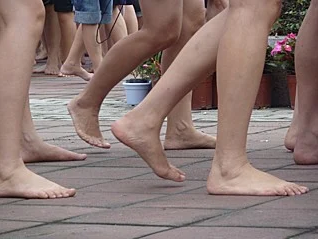
I expect (and kind of hope) that many people reading the title of this section will think, "Uh, I don't need instruction about how to walk. I've been doing it all my life."I also expect (and definitely hope) that others will read the title and think, "Finally, the answer to my most burning question! I've been worried that I'm walking wrong."For those of you in the first group, let me ask you this: Do tribal women in Africa with water jugs balanced on their heads walk in the same way that Olympic race walkers do? And, do either of those people walk the way you do?I'd bet that the answer you found for both of those questions is No.That's because walking isn't just walking. There are ways of walking that are more or less effective, more or less efficient, more or less healthy and strong.And if you accept that premise, that could put you in the second group.Now, for those of you in the second group, I have what could seem like bad news. There is no one answer to "How do I walk."This article will not reveal the hidden secret of locomotion that only wisened Tibetan lamas from the Drepung monastery have taught to their senior disciples, or the geometrical relationships between your lower extremity joints that is optimal for effortless, pain-free walking, or the best footwear you can use for carrying a 200 pound pack on a 1,000 mile hike over broken glass.It'll actually do something better.It'll show you how to become your own best teacher and discover your own secrets for walking efficiently, enjoyably, and easily.Before we can discuss walking, lets review of the premises behind, and arguments supporting barefoot running: Landing on your heel, especially with the ankle forward of the knee and the knee almost straight, sends shock through the joints -- the ankle, the knee, the hip, and up the spine.This isn't good.Running barefoot reduces the likelihood that you'll land on your heel... because it hurts.Landing on the forefoot or midfoot, with a bent knee and the ankle not front of the knee, reduces the force going through your joints, allowing you to use the muscles, ligaments, and tendons as natural springs and shock absorbers.So, what does all this have to do with walking?Well, the whole conversation about foot-strike rarely came up prior to the barefoot running boom. Now it's practically dinner party conversation, where the barefoot gang looks down their noses in disgust at shoe-wearing heel-strikers. And the increase in the volume of the foot-strike conversation has led to another question, which probably nobody asked prior to the publication of Born To Run. This is a question I'm emailed almost daily, namely, "How should my foot strike when I walk?"It sounds like a reasonable question.If there is some optimal way for your foot to land when you run, there must be a "right" way for it to land when you walk, right?Well, there's debate among the barefoot running research community about whether a forefoot strike is better/worse than a midfoot strike, or whether foot strike is idiosyncratic and different for different runners. There's even an argument about whether heel striking is as evil as as most barefoot runners take it to be.How can this be?Simple. Because heel strike is the effect of other aspects of your biomechanics, not the cause.Think about it. The only way you can change how your foot lands on the ground is what you do with your ankle, your hip, and your knee.To not land on your heel when you run, you probably need to bend your knee more than you usually do. But that alone could cause you to trip over your toes, so you also need to bend your hip a bit more. And then you may relax your ankle a little rather than pulling your toes towards your knee.So "land on your forefoot" is really just a cue for "bend the hip and knee and relax the ankle," but if you told someone to change their hip, knee and ankle joint angles, they'd be too confused to even take a step.Well, it's similar with walking. Where your foot lands isn't the issue. How you move your foot through space is.When you walk, your foot can land in one of three ways: touching the forefoot first, followed by the heel dropping to the ground; landing basically flat-footed, probably touching the midfoot first, or; touching/rolling over the heel... which is sort of still a flat-footed landing but with the heel contacting first.Which one of these happens is a function of how fast/slow you're walking, whether you're walking up/down hill, and what kind of surface you're on.Really, there's no need to worry about foot-strike. It'll take care of itself... if you pay attention to this next thing.First, you'll want to be barefoot, or as close to barefoot as possible.Why? Because there's value in being able to articulate the foot and to letting the nerves in your feet actually feel the ground.Many podiatrists recommend barefoot walking as a cure for plantar fasciitis. Many chiropractors and orthopedic physicians recommend barefoot walking to cure lower back pain.Being barefoot can help with plantar fasciitis because, when you're out of shoes, especially on uneven surfaces, you'll use your feet in a way that "pre-loads" the plantar fascia, putting them in a strong position when you need them.Being barefoot can help with lower back pain because... well let's take a look at that one more closely.Imagine standing on one leg.If I asked you to start walking, most people would basically swing their free leg out in front of them and, at the right moment, push off the toes of the back leg to pivot over the front foot, which has landed on the heel way out in front of you.You basically walk "behind your feet." One interesting thing about walking behind your feet is that you're never really off balance. We'll come back to that idea in a moment.Now, imagine being on one foot again. If I asked you to contract whatever muscle or muscles you can think of that would move you forward, which one(s) would you tighten. Remember I said "move you forward." Falling forward doesn't count, so the answer is not "ankle" (leaning) or "abs" (as in, bending forward until you fall).The answer is the muscles that are referred to as the "prime movers" in our body: The glutes and hamstrings.Tighten the glutes and hamstrings and you'll actually MOVE forward.And stronger glutes and hamstrings protect the lower back.But after you tighten your glutes and hamstring you will eventually get off balance and fall on your face... unless... you put your other foot down to stop you.And here's where it gets cool.If you simply place your foot down where it'll stop you from falling (rather than swinging it out in front of you like you usually do), it'll land closer to your center of mass, more flat-footed, with a slightly bent hip and knee, and with the now front leg in a biomechanically stronger position. You will have planted your foot.If you repeat this -- using your glutes and hips to move you forward, and placing your foot instead of swinging your leg forward -- you'll be supporting your lower back... and your knees, and your hips, and even your ankles.Your foot-strike will take care of itself.You'll feel like you're walking "on top of your feet" rather than behind them.And this makes you stronger, whether you're going for a stroll or carrying a 50 pound pack on a trail (which, by the way, will be easier because your engaged glutes and hamstrings support your lower back).When you think about staying on top of your feet, and using your glutes and hamstrings, you'll naturally discover the easy and efficient ways to walk in any situation. You'll understand it from the inside out, from your own experience, not from some guidebook about how many inches behind your knee you should have your ankle when you're walking up a 10 degree incline in 50 degree weather on a Thursday.Combine this with feeling the world because you're barefoot or in some truly minimalist footwear (be warned, most major shoe companies claim their product is "barefoot" when it's about as close to barefoot as a pair of stilts), and I guarantee that your next walk or hike will be a revelation... and a lot of fun.I'm still working on a video to demonstrate what I mean, but in the meantime, check out this video from Dr. Justin Lin, which makes the points I made above:The content of this post does not constitute and is not intended to be a substitute for professional medical advice, diagnosis or treatment. Always seek the advice of a physician or other qualified health provider with any questions or concerns you may have about your health or a medical condition.